Queer Places:
Harvard University (Ivy League), 2 Kirkland St, Cambridge, MA 02138
Mount Auburn Cemetery, 580 Mt Auburn St, Cambridge, MA 02138, United States
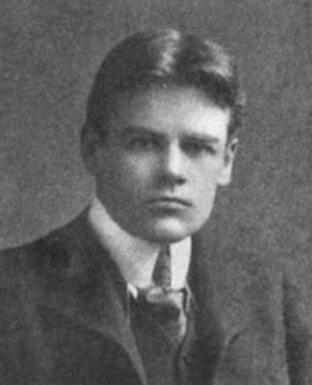 George Cabot "Bay" Lodge (October 10, 1873 – August 21, 1909) was born in Boston on October 10, 1873, into a prominent Boston Brahmin family. He was the
son of Anna Cabot Mills Davis Lodge and Henry Cabot Lodge, a powerful Republican U.S. Senator, and grew up primarily at the family home in Nahant,
Massachusetts. His lineage included numerous notable political and military figures, such as his great-great-grandfather U.S. Senator George Cabot, for
whom he was named, and his maternal grandfather Rear Admiral Charles Henry Davis. Lodge pursued extensive higher education, attending Harvard
College—where he joined the Harvard Polo Club—before continuing his studies in France at the University of Paris and in Germany at the University of
Berlin well into his mid-twenties.
George Cabot "Bay" Lodge (October 10, 1873 – August 21, 1909) was born in Boston on October 10, 1873, into a prominent Boston Brahmin family. He was the
son of Anna Cabot Mills Davis Lodge and Henry Cabot Lodge, a powerful Republican U.S. Senator, and grew up primarily at the family home in Nahant,
Massachusetts. His lineage included numerous notable political and military figures, such as his great-great-grandfather U.S. Senator George Cabot, for
whom he was named, and his maternal grandfather Rear Admiral Charles Henry Davis. Lodge pursued extensive higher education, attending Harvard
College—where he joined the Harvard Polo Club—before continuing his studies in France at the University of Paris and in Germany at the University of
Berlin well into his mid-twenties.
In 1897, Lodge returned to professional life, working as a secretary to both his father and a U.S. Senate committee in Washington, D.C., and later
serving valiantly as a naval cadet during the Spanish-American War. Primarily remembered as an American poet of the late nineteenth and early twentieth
centuries, he was closely tied to the literary and political circles of his era. He was a close friend of President Theodore Roosevelt, who later wrote a
fond introduction for his posthumous 1911 collection, Poems and Dramas of George Cabot Lodge. Lodge was best known for his delicate sonnets, including
Song of the Wave and Essex, with an artistic style deeply influenced by the philosophical pessimism of Schopenhauer and
Giacomo Leopardi, alongside French literary figures like Baudelaire and Leconte de Lisle.
Beyond the traditional contours of his public life, Lodge was woven into the fabric of Boston's sophisticated and homoerotic bohemia. He frequently
spent time within elite, countercultural male networks centered around figures like
William Sturgis Bigelow and
Charles Warren Stoddard. Notably, Lodge was a regular guest at Tuckernuck, a secluded country house
on an island off Nantucket operated by Bigelow. Described by Henry Adams as a scene of medieval splendor,
Tuckernuck served as a sanctuary where elite men, including Lodge, gathered to take their ease in an untamed natural setting under a strict custom of
communal nudity by day, followed by formal attire at dinner.
On August 19, 1900, Lodge married Mathilda Elizabeth Frelinghuysen Davis at the Church of the Advent in Boston. Mathilda was a granddaughter of U.S.
Secretary of State Frederick Theodore Frelinghuysen. The couple had three children: Henry Cabot Lodge Jr., who became a U.S. Senator and the 1960
Republican vice-presidential nominee; John Davis Lodge, an actor who became Governor of Connecticut; and Helena Constance Lodge, who later became a
baroness through her marriage to Belgian diplomat Edouard de Streel.
Lodge's life was cut short at the age of thirty-five when he died of heart failure on August 21, 1909, while staying at the family camp on Tuckernuck
Island. He was cremated at Mount Auburn Cemetery in Cambridge, Massachusetts. Following his death, his close friend and confidant Henry Adams authored a
biographical tribute titled The Life of George Cabot Lodge in 1911, sealing his legacy within the intersecting worlds of American letters, political
aristocracy, and turn-of-the-century aestheticism.
References:
Other references:
- Adams, Henry. The Life of George Cabot Lodge. Boston: Houghton Mifflin Company, 1911. (A foundational book-length biography written by his close friend, confidant, and fellow intellectual).
- Lodge, George Cabot. Poems and Dramas of George Cabot Lodge. Boston and New York: Houghton Mifflin Company, 1911. (Posthumous two-volume collection featuring a fond introductory essay by President Theodore Roosevelt).
- The Song of the Wave and Other Poems (1898)
- Poems (1902)
- Cain: A Drama (1904)
- The Great Adventure (1905)
- Herakles (1908)
- Crowley, John. Glad To Be Gay / Discussions on turn-of-the-century American bohemia, elite homosocial networks, and island sanctuaries like Tuckernuck.
- Letters and Correspondence Collections: Archives concerning Boston’s cultural elite, including correspondence between Thomas Russell Sullivan, Isabella Stewart Gardner, and William Sturgis Bigelow.
Support this project
This website is a passion project researched, developed, and funded entirely by me. If you find the content valuable and would like to help support the ongoing research and hosting costs, any contribution is deeply appreciated.
Thank you for keeping this independent resource alive!
My books on Amazon: Elisa Rolle's books
BACK TO HOME PAGE
